
| Broker | Regulation | Min Deposit | Spread From | |
|---|---|---|---|---|
| 1 eToro | FinCEN, SEC | $100 | 1.0 pips | Visit Broker → |
| 2 Plus500 | SEC, FINRA | $100 | 0.8 pips | Visit Broker → |
The best trading app in 2026 is not just a convenience — it is the primary trading interface for millions of investors and active traders worldwide. More than 70% of retail trades now originate from mobile devices, and the gap between what a phone screen can do and what a desktop platform delivers has narrowed to the point where, for most users, a well-designed trading app is the only platform they need.
But the sheer number of options makes choosing difficult. There are apps built for buying your first share of stock. There are apps designed for executing fifty forex scalps per day. There are apps that let you trade crypto around the clock. There are apps that simulate markets with paper money so you can learn without risk. And increasingly, there are apps powered by AI that analyze markets, surface trade ideas, and automate execution. Each serves a different user — and selecting the wrong one costs you either money, time, or both.
This guide evaluates the best trading apps across every major category: stocks, forex, crypto, day trading, paper trading, and AI-assisted trading. Every app reviewed here is regulated, available on iOS and Android, and assessed against the same criteria — cost, functionality, reliability, and the specific trader profile it serves best. Whether you are downloading your first investment app or replacing a platform that no longer meets your needs, this analysis gives you the data to decide.
Table of Contents
- What Makes a Great Trading App in 2026
- Best Trading Apps 2026 — Master Comparison
- Best Trading Apps Overall
- Best Stock Trading App
- Best Forex Trading App
- Best Crypto Trading App
- Best Day Trading App
- Best Trading App for Beginners
- Best Paper Trading App
- Best AI Trading App
- Free Trading Apps vs Paid Platforms
- How to Stay Safe on Mobile Trading Apps
- How to Choose the Best Trading App for You
- Common Mistakes When Picking a Trading App
- Final Verdict
- Frequently Asked Questions
What Makes a Great Trading App in 2026
Not every trading app deserves a place on your phone. The difference between a genuinely useful mobile trading app and a mediocre one comes down to several measurable criteria that apply regardless of asset class or experience level.
Execution Speed and Reliability
When you tap “Buy” or “Sell,” the app should execute your order within milliseconds, not seconds. Delays cause slippage — the difference between your intended price and the price you actually receive. The best apps maintain fast, stable performance even during high-volatility events, earnings releases, or crypto market surges when server load spikes dramatically.
Charting and Analysis
Mobile charting has matured significantly. Leading apps now offer 50+ technical indicators, multiple timeframes, drawing tools, and — in some cases — Pine Script or custom indicator support. The quality of chart rendering on smaller screens, pinch-to-zoom responsiveness, and the ability to overlay multiple datasets separates professional-grade apps from basic ones.
Asset Coverage
The best apps give you access to the markets you actually trade. A stock trading app should cover US and international exchanges. A forex trading app needs 50+ currency pairs. A crypto trading app should list major coins and meaningful altcoin coverage. Multi-asset apps that combine stocks, forex, crypto, ETFs, and commodities in a single interface eliminate the need for multiple downloads.
Cost Structure
Commission-free stock trading has become standard, but “free” does not mean costless. Payment for order flow (PFOF), spread markups, currency conversion fees, withdrawal charges, and premium subscription tiers all affect the real cost of using a trading platform. The most transparent apps disclose every fee clearly and do not bury costs in opaque pricing models.
Security and Regulation
A trading app handles your money and personal data. Biometric authentication (Face ID, fingerprint), two-factor authentication, encrypted data transmission, and regulatory oversight from authorities like the FCA, SEC, ASIC, or CFTC are non-negotiable. An unregulated app with beautiful UI is still an unregulated app.
User Experience Design
Great UX on mobile means intuitive navigation, one-tap order placement, customizable watchlists, smart notification systems, and seamless transitions between analysis and execution. The app should feel fast, logical, and focused — not like a desktop platform awkwardly compressed onto a phone screen.
Best Trading Apps 2026 — Master Comparison
| App | Best For | Assets | Commission | Paper Trading | Regulation | Rating (iOS/Android) |
|---|---|---|---|---|---|---|
| eToro | Social & copy trading | Stocks, Forex, Crypto, ETFs, Commodities | $0 stocks; spread on forex/crypto | Yes — $100K virtual | FCA, CySEC, ASIC | 4.4 / 4.1 |
| Interactive Brokers (IBKR) | Professional multi-asset | Stocks, Options, Futures, Forex, Bonds, Crypto | $0 (IBKR Lite) / tiered (Pro) | Yes | SEC, CFTC, FCA, ASIC | 4.3 / 3.9 |
| IG | Forex, CFDs & research | Forex, Shares, Indices, Commodities, Crypto | Spread-based; DMA commission | Yes — £10K virtual | FCA, ASIC, BaFin, CFTC | 4.4 / 4.0 |
| Pepperstone | Forex scalping & algo | Forex, Indices, Commodities, Crypto, Shares CFDs | $0 (Standard) / $7 RT (Razor) | Yes — 30 days | FCA, ASIC, CySEC, DFSA | 4.2 / 4.0 |
| Plus500 | Simple CFD trading | Forex, Shares, Indices, Commodities, Crypto, Options | Spread-based; $0 commission | Yes — unlimited | FCA, CySEC, ASIC, MAS | 4.3 / 4.2 |
Best Trading Apps Overall
eToro — Best All-in-One Trading App
Why It Stands Out
eToro is the most downloaded multi-asset trading app globally, and for good reason. It merges stock trading, forex, crypto, ETFs, and commodities into a single interface built around social interaction. The app does not just let you trade — it lets you observe what 30 million other users are trading, follow their strategies, and automatically copy their positions with a few taps. No other online trading app replicates this combination at equivalent scale.
Mobile Experience
The eToro app is designed mobile-first. Navigation flows naturally between the social feed (where traders share analysis and ideas), the markets section (organized by asset class), and the portfolio view (with real-time P&L). Order entry is simplified: tap an asset, set your size and risk controls, and execute. The CopyTrader feature is fully functional on mobile — you can browse, filter, and allocate to Popular Investors without touching a desktop. Charting includes standard indicators and timeframes, though it lacks the depth of dedicated charting platforms.
What You Can Trade
Stocks (commission-free on real shares in supported regions), 49+ forex pairs, 80+ crypto assets, ETFs, indices, and commodities. The breadth of asset coverage makes eToro a genuinely versatile investment app — you can build a diversified portfolio across asset classes within a single account.
Costs
Zero commission on stock purchases. Forex and crypto costs are embedded in the spread (approximately 1.0 pip on EUR/USD; 1% on major crypto pairs). A $5 withdrawal fee and currency conversion charges on non-USD deposits apply. $10/month inactivity fee after 12 months.
Who Should Use It
eToro is the best trading app for beginners who want guided market exposure through copy trading and social observation, and for intermediate traders who value an all-in-one multi-asset experience on mobile.
Interactive Brokers (IBKR Mobile) — Best Professional Trading App
Why It Stands Out
IBKR Mobile delivers what no other trading app attempts: near-full access to the capabilities of an institutional-grade brokerage from a phone. Over 150 markets across 33 countries. Stocks, options, futures, forex, bonds, funds, and crypto — all from one account. Order types that include VWAP, TWAP, adaptive algorithms, and iceberg orders. Real-time portfolio analytics, margin calculations, and risk reporting. This is not a simplified mobile companion — it is a professional trading terminal that fits in your pocket.
Mobile Experience
The IBKR Mobile app offers two interfaces: a streamlined view for quick trades and portfolio monitoring, and an advanced mode that exposes TWS-level features including options chain analysis, portfolio margin details, and multi-leg strategy builders. Charting is comprehensive with 70+ indicators and drawing tools. The app supports fingerprint and Face ID authentication, real-time alerts, and scanner functionality. The learning curve is steeper than consumer-oriented apps, but the payoff in functionality is substantial.
What You Can Trade
Everything: US and international stocks, options on dozens of exchanges, futures, forex (100+ pairs including spot conversion), bonds, mutual funds, ETFs, and crypto. No other mobile app matches this breadth.
Costs
IBKR Lite offers commission-free US stock and ETF trades. IBKR Pro charges tiered commissions starting at $0.0035/share for stocks, ~$2 per $100K for forex, and competitive rates across all asset classes. Raw spreads on forex are 0.1–0.2 pips. No inactivity fee.
Who Should Use It
Experienced traders and investors who need multi-asset, multi-market access with institutional pricing. IBKR Mobile is the best app for stocks when combined with options, futures, and international market access — and the best app to buy stocks at the lowest possible all-in cost.
Best Stock Trading App

eToro — Best for Social Stock Investing
eToro offers commission-free real stock purchases (not CFDs) in supported regions, alongside fractional shares that let you buy a piece of Amazon or Tesla for as little as $10. The social layer — trader discussions, published portfolios, and Smart Portfolios — adds a community dimension that transforms stock picking from a solitary activity into a collaborative one. For investors who want to see what others are buying and why, eToro is the best stock trading app for social discovery.
Interactive Brokers — Best for Serious Stock Investors
IBKR provides access to stocks on over 90 exchanges in 33 countries. Commission-free US trading through IBKR Lite makes it accessible, while IBKR Pro’s tiered pricing ($0.0035/share minimum) provides superior execution quality for active traders. Fundamental screeners, real-time financial data, analyst ratings, and earnings calendars are all accessible on mobile. If you trade international stocks, hold multi-currency positions, or need options alongside your equity portfolio, IBKR is the best app for stocks without qualification.
IG — Best for Stock CFDs and Spread Betting
IG’s app provides access to thousands of international share CFDs and, for UK/Ireland clients, tax-free spread betting on stocks. The app integrates Reuters news, analyst commentary, and client sentiment data directly into the stock browsing experience. DMA (Direct Market Access) stock trading is available for professional accounts. For traders who want leveraged stock exposure or tax-advantaged spread betting, IG’s mobile app is a top-tier choice.
Best Forex Trading App
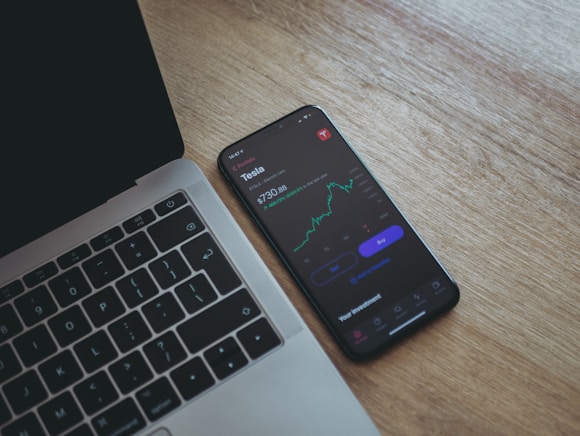
Forex trading demands speed, tight pricing, and reliable execution — requirements that test the limits of mobile platforms. The best forex trading app is the one that delivers desktop-quality execution in your hand without compromise.
Pepperstone — Best Forex Trading App for Active Traders
Pepperstone’s mobile offering spans three separate apps: MetaTrader 4, MetaTrader 5, and the cTrader mobile app — each connecting to Pepperstone’s pricing and execution infrastructure. The MT4/MT5 apps support Expert Advisor management (though EAs run on the server, not the phone), full charting with indicators, and one-tap order execution. cTrader mobile offers Level II pricing, advanced order types, and a modern interface. Through TradingView’s mobile web interface, you can also execute Pepperstone trades via browser.
The Razor account’s raw spreads (from 0.0 pips on EUR/USD) and sub-30ms execution translate directly to the mobile experience — orders placed from the app route through the same infrastructure as desktop trades. No inactivity fees, no withdrawal fees. For scalpers and day trading app users in forex, Pepperstone is the benchmark.
IG — Best Forex App for Analysis and Research
IG’s proprietary mobile app is consistently rated among the best forex trading apps in the industry. It combines charting with 30+ indicators, integrated Reuters news, an economic calendar, and client sentiment data — all on mobile. The app supports both spread betting (UK) and CFD forex trading with access to 80+ currency pairs. Spreads start at 0.6 pips on EUR/USD. For forex traders who base decisions on fundamental analysis and macroeconomic data, IG’s mobile research integration is unmatched.
eToro — Best Forex App for Copy Trading
eToro’s forex trading app shines for traders who want to participate in currency markets through copy trading. Browse Popular Investors who specialize in forex, review their currency pair allocation, risk scores, and performance history, then allocate capital to mirror their trades — all from your phone. The app provides 49+ forex pairs with commission-free, spread-only pricing. For beginners entering the forex market, eToro’s mobile CopyTrader is the lowest-friction path to live currency exposure.
Best Crypto Trading App
Crypto never sleeps, which makes your crypto trading app the most critical piece of infrastructure you own. The best crypto trading app provides 24/7 execution, real-time alerts, and access to a wide range of digital assets — all with the security and regulation that the crypto space has historically lacked.
eToro — Best Crypto App for Variety and Social Trading
eToro lists 80+ cryptocurrencies — from Bitcoin and Ethereum to mid-cap altcoins and emerging tokens. The social trading layer is particularly valuable in crypto, where community sentiment often drives price action. CopyTrader includes crypto-focused Popular Investors whose portfolios you can replicate automatically. Spreads on major crypto pairs start at 1%, which is competitive for a regulated multi-asset platform. eToro is the best crypto trading app for users who want regulated crypto exposure alongside stocks and forex in a single account.
Interactive Brokers — Best Crypto App for Institutional Pricing
IBKR offers crypto trading on major coins with institutional-grade pricing and execution. The key advantage is integration: you can trade Bitcoin, Ethereum, and other supported cryptocurrencies alongside stocks, options, and forex from the same account and app. Commissions are competitive at 0.12%–0.18% depending on volume. For traders who view crypto as one component of a broader portfolio, IBKR’s unified mobile experience eliminates the need for a separate crypto trading app.
Plus500 — Best Crypto CFD App
Plus500 provides CFDs on a wide range of cryptocurrencies, allowing traders to go long or short on price movements without owning the underlying assets. The app’s guaranteed stop-loss orders are particularly valuable in crypto’s volatile environment, where gaps and flash crashes are common. Negative balance protection ensures you cannot lose more than your deposit. For traders who want leveraged crypto exposure with built-in risk controls, Plus500’s approach to crypto trading through CFDs is compelling.
Best Day Trading App
Day trading requires execution speed, real-time data, advanced order types, and charts that update without lag. Not every trading app is built for this intensity. The best day trading app is the one that keeps up with your pace without introducing friction, delay, or missed fills.
Pepperstone — Best Day Trading App for Forex and CFDs
Pepperstone’s combination of raw spreads (Razor account), sub-30ms execution, and access to MT4, MT5, and cTrader mobile apps makes it the strongest day trading app for forex and CFD scalpers. The cTrader mobile app stands out with Level II pricing, advanced pending orders, and a clean interface designed for rapid execution. No inactivity or withdrawal fees means your cost profile is entirely determined by your trading activity. For traders who measure their day in pips and ticks, Pepperstone’s mobile infrastructure is built to perform.
Interactive Brokers — Best Day Trading App for Multi-Asset
IBKR Mobile supports the full range of order types that day traders need: limit, stop, stop-limit, trailing stop, bracket orders, and algorithmic execution. The app provides real-time Level II market data, time-and-sales data, and customizable scanners for identifying intraday opportunities across stocks, options, and futures. IBKR Pro’s per-share pricing is cost-effective for active day traders who execute hundreds of orders per session. The best app for day trading across multiple asset classes simultaneously.
IG — Best Day Trading App for Analysis-Driven Traders
IG’s mobile app integrates real-time news, economic calendars, and in-house analyst commentary directly into the trading workflow — critical resources for day traders whose strategies are event-driven. The app’s charting is capable enough for intraday technical analysis, and execution on forex and index CFDs is reliable during fast-moving markets. Spreads on EUR/USD from 0.6 pips and on major indices from 1 point make IG a cost-competitive day trading app for traders who base entries on fundamental catalysts.
Best Trading App for Beginners

Beginners need three things from a trading app: simplicity that does not overwhelm, educational content that builds competence, and a risk-free environment to practice before committing real money. The best trading app for beginners delivers all three without hiding important features or encouraging reckless behavior.
eToro — Top Pick for Beginners
eToro’s entire product philosophy centers on accessibility. The social feed contextualizes market activity by showing you what experienced traders are doing in real time. CopyTrader lets you gain live market exposure while you learn, with transparent performance data and risk scores for every available trader. The $100,000 demo account provides unlimited practice time. The platform’s educational resources — including trading guides, video tutorials, and the eToro Academy — offer structured learning paths for new participants. eToro is the best trading app for beginners who learn best by observing and gradually transitioning to independent decision-making.
Plus500 — Best Simple Trading App for Beginners
Plus500’s deliberately minimal interface removes distractions that overwhelm new traders. The app focuses on what matters: an asset list, an order ticket, and risk controls. Guaranteed stop-loss orders (GSLOs) let beginners set absolute maximum loss thresholds on every position — a feature that provides structural protection against the outsized losses that often end beginner trading careers prematurely. The unlimited demo account allows indefinite practice. Plus500 is ideal for beginners who want a clean, focused starting point without the social and analytical complexity of feature-rich platforms.
IG — Best Educational Trading App
IG Academy is the most structured educational program offered by any brokerage app. It covers market fundamentals, technical analysis, risk management, and strategy development through interactive courses, quizzes, videos, and live webinars — all accessible from mobile. Combined with IG’s demo account and integrated market commentary, the app creates an environment where beginners can learn, practice, and gradually transition to live trading with professional-quality analytical support.
Best Paper Trading App
Paper trading — practicing with virtual money in live market conditions — is the most risk-free way to test strategies, learn platform mechanics, and build confidence before committing real capital. The best paper trading app simulates real market conditions as closely as possible while providing the same tools available in live accounts.
Paper Trading App Comparison
| App | Virtual Balance | Time Limit | Assets Available | Matches Live Conditions |
|---|---|---|---|---|
| eToro | $100,000 | Unlimited | All assets (stocks, forex, crypto, ETFs) | Same platform; spreads may differ |
| Plus500 | Unlimited reset | Unlimited | All CFDs | Identical interface; simulated fills |
| Interactive Brokers | $1,000,000 | Unlimited | All markets and instruments | Delayed data; same order types |
| IG | £10,000 | Unlimited | All forex, shares, indices, commodities | Live pricing; simulated execution |
| Pepperstone | Configurable | 30 days (renewable) | All forex and CFDs | Live spreads; simulated fills |
For pure paper trading app quality, eToro and Interactive Brokers lead. eToro’s demo mirrors the full live platform including CopyTrader — you can practice copy trading with virtual funds. IBKR’s paper trading account provides $1M in virtual capital with access to all global markets, making it the most comprehensive simulation environment available on mobile. Plus500’s unlimited reset feature lets you restart your demo balance whenever you want — useful for testing multiple strategies from a clean starting point.
Best AI Trading App

The best AI trading app in 2026 uses artificial intelligence to enhance — not replace — human decision-making. AI features in trading apps now span pattern recognition, sentiment analysis, automated portfolio rebalancing, risk assessment, and natural language market queries. Here is how the leading apps integrate AI into their mobile experience.
Interactive Brokers — AI-Powered Analysis and Automation
IBKR integrates AI across its platform in practical, non-gimmicky ways. The Impact app feature uses AI to analyze how news events may affect specific portfolio positions. Adaptive algo orders use machine learning to optimize execution timing and minimize market impact. IBKR’s market scanners can be configured with AI-driven filters that identify statistical patterns, unusual volume, and momentum shifts. For sophisticated traders, the API enables building custom AI strategies that execute through IBKR’s infrastructure. This is the closest thing to an institutional-grade AI trading app available to retail users.
eToro — AI-Enhanced Social Discovery
eToro uses AI to power its recommendation algorithms — surfacing Popular Investors, Smart Portfolios, and market insights tailored to your trading interests and portfolio composition. The AI does not execute trades autonomously but guides discovery and allocation decisions. For traders who want AI-assisted curation rather than AI-executed trading, eToro’s approach is measured and practical.
IG — AI-Driven Market Analysis
IG integrates AI-powered analytics into its research offering. Automated technical analysis scans across instruments identify chart patterns, support/resistance levels, and potential breakout setups. The AI commentary feature generates natural-language summaries of market conditions for specific instruments. These tools complement rather than replace IG’s human analyst team, creating a hybrid research model that combines AI efficiency with human judgment.
A Note on AI Trading App Hype
Many apps marketed as “AI trading” use the term loosely — applying basic algorithms or rule-based systems that do not constitute genuine artificial intelligence. Be cautious of apps that promise AI-driven guaranteed returns, fully automated profitable trading, or “neural network predictions” without transparent methodology. Legitimate AI integration in trading apps enhances analysis and execution — it does not eliminate market risk or guarantee outcomes.
Free Trading Apps vs Paid Platforms
The proliferation of free trading apps has been one of the defining trends in retail investing. But “free” requires scrutiny — every business model has a revenue source, and understanding where your app makes its money helps you assess whether the trade-offs serve your interests.
How Free Apps Make Money
- Payment for order flow (PFOF): Some brokers sell your order flow to market makers, who may execute at slightly less favorable prices than the public exchange. This is legal in the US but banned in the EU and UK under MiFID II.
- Spread markups: Commission-free forex and crypto apps often embed wider spreads than their commission-based competitors — you pay, just not visibly.
- Premium subscriptions: Free tiers serve as onboarding funnels for paid plans that unlock advanced features, real-time data, or margin access.
- Interest on uninvested cash: Brokers earn interest on client cash balances, and many share only a portion of this revenue with clients.
- Securities lending: Some apps lend your shares to short-sellers and earn lending fees.
When Paid Features Are Worth It
For casual investors buying and holding stocks, free apps are perfectly adequate. For active day traders, forex scalpers, or options traders, paid features — real-time Level II data, raw spreads, advanced order types, and professional charting — can pay for themselves many times over through better execution and lower all-in trading costs. Interactive Brokers Pro and Pepperstone’s Razor account are paid-tier examples where the commission cost is more than offset by tighter pricing and superior fills.
How to Stay Safe on Mobile Trading Apps
Your trading app contains financial assets and sensitive personal data. Mobile security is not optional — it is a prerequisite for participation.
Essential Security Practices
- Enable biometric authentication. Face ID or fingerprint login prevents unauthorized access if your device is lost or stolen. All five apps reviewed here support biometric login.
- Activate two-factor authentication (2FA). Use an authenticator app (not SMS, which is vulnerable to SIM-swap attacks) as your second factor wherever supported.
- Use a unique, strong password. Your brokerage password should not be reused on any other service. Use a password manager.
- Keep your app updated. Security patches are distributed through app updates. Delaying updates leaves known vulnerabilities unpatched.
- Avoid public Wi-Fi for trading. Public networks are susceptible to interception. Use cellular data or a VPN when trading on mobile outside your home network.
- Verify regulation independently. Before depositing money, confirm the app’s regulatory license on the issuing authority’s public register.
- Monitor account activity. Enable push notifications for logins, trades, and withdrawals. Any activity you did not initiate should be reported immediately.
How to Choose the Best Trading App for You
Selecting the right trading app is a matching exercise — aligning an app’s strengths with your specific needs. Follow this framework to narrow the field.
Step 1: Define What You Want to Trade
If you trade only stocks, you need a stock trading app. If you trade forex, you need a forex trading app with competitive spreads and fast execution. If you want multiple asset classes in one place, a multi-asset app like eToro or IBKR eliminates the need for multiple accounts.
Step 2: Assess Your Experience Level
Beginners benefit from guided experiences: copy trading, educational content, and simple interfaces. eToro and Plus500 serve this need. Experienced traders need advanced tools: Level II data, algorithmic orders, API access. IBKR and Pepperstone serve this need. Choosing a professional app as a beginner — or a beginner app as a professional — creates friction in either direction.
Step 3: Prioritize Regulation
Only consider apps regulated by tier-one authorities: FCA, SEC, ASIC, CySEC, CFTC/NFA. Verify the license independently. This single step eliminates the vast majority of unsafe options.
Step 4: Compare Total Costs
Calculate the all-in cost for your typical trading pattern: spreads, commissions, conversion fees, withdrawal fees, and subscription costs. A “free” app with wide spreads can be more expensive than a commission-based app with institutional pricing.
Step 5: Test With Paper Trading
Download the app, create a demo account, and use it for at least two weeks. Evaluate: order placement speed and UX, charting quality on your phone screen, notification reliability, portfolio reporting clarity, and overall stability during market hours. Your experience with the paper trading app predicts your experience with real money.
Step 6: Start Small
Fund with the minimum deposit, execute a few real trades, and — critically — test a withdrawal. This validates that the app works as advertised under live conditions. Scale up only after confirming that execution, pricing, and withdrawal processing meet your standards.
Common Mistakes When Picking a Trading App
- Downloading the most popular app without research. Download counts reflect marketing budgets, not quality. The most-downloaded app may not suit your trading style, asset class, or experience level.
- Choosing based on UI design alone. A beautiful interface does not indicate strong execution, competitive pricing, or robust regulation. Judge apps on substance — cost, speed, reliability, and regulatory status — not screenshots.
- Ignoring the revenue model. If you do not know how a free trading app makes money, you may be the product. Understand PFOF practices, spread markups, and data monetization before committing.
- Skipping regulatory verification. An app’s claim to be “regulated” means nothing until verified on the regulator’s public register. This takes minutes and protects your capital.
- Not testing withdrawals. An app that accepts deposits instantly but delays withdrawals indefinitely is a critical warning sign. Test with a small withdrawal early.
- Treating demo results as live results. Paper trading simulates market exposure but does not replicate slippage, partial fills, or the emotional pressure of real capital at risk. Calibrate expectations.
- Using excessive leverage on mobile. The speed and convenience of mobile trading can encourage impulsive, over-leveraged trades. Stick to your risk management plan regardless of device.
- Neglecting push notification setup. Price alerts, margin warnings, and fill notifications are essential for managing positions when you are away from the screen. Configure them immediately after downloading.
- Failing to secure the app properly. Not enabling biometric login and 2FA on a financial app is equivalent to leaving your wallet on a park bench. Security setup should be your first action after download.
- Switching apps every month. Each switch involves learning a new interface, transferring funds, and rebuilding watchlists. Invest time in thorough initial research to avoid costly app-hopping.
Final Verdict
The best trading app is the one whose strengths align with your needs — not the one with the biggest marketing budget or the most App Store downloads. This guide has evaluated five regulated, established apps across every major use case. Here is the summary:
eToro is the best trading app for beginners, social traders, and anyone who wants stocks, forex, and crypto in a single, community-driven mobile experience. Interactive Brokers is the best app for stocks, multi-asset access, and professional-grade mobile trading at institutional costs. Pepperstone is the best forex trading app and best day trading app for active traders who measure quality in pips, milliseconds, and zero unnecessary fees. IG delivers the strongest research, education, and analytical depth on mobile — the best trading app for traders who make decisions based on data and analysis. Plus500 provides the simplest, most risk-managed CFD experience available — the right app for traders who value clarity, guaranteed stops, and public-company transparency.
Across all choices, three rules apply. First, regulation is the entry ticket — do not use an app that is not licensed by a tier-one authority. Second, test before you commit — every app here offers a demo. Third, costs are not just commissions — calculate the full picture of spreads, fees, and hidden charges before funding a live account.
Your phone is the most powerful trading tool ever made available to individual investors. Choose the app that makes the most of it.
For deeper analysis, see our guides on forex trading fundamentals, market mechanics, strategy development, risk management, and CFD trading explained.
Frequently Asked Questions
What is the best trading app overall in 2026?
There is no single best trading app for everyone. eToro leads for beginners and social/copy trading across stocks, forex, and crypto. Interactive Brokers is the professional’s choice with institutional pricing and access to 150+ global markets. Pepperstone dominates for active forex and day trading with raw spreads and sub-30ms execution. IG excels in research and education. Plus500 offers the simplest CFD experience with built-in risk controls. The right app depends on what you trade, how frequently, and your experience level.
What is the best trading app for beginners?
eToro is the strongest choice for beginners. Its CopyTrader feature lets new users replicate experienced traders while learning, the social feed provides real-time context about market activity, and the $100,000 demo account offers unlimited practice. Plus500 is an alternative for beginners who prefer extreme simplicity and built-in guaranteed stop-loss orders. IG’s Academy provides the most structured educational program. All three apps are regulated by multiple tier-one authorities.
What is the best stock trading app?
For casual investors, eToro provides commission-free real stock purchases with fractional shares and a social discovery experience. For serious investors and active traders, Interactive Brokers offers access to stocks on 90+ exchanges in 33 countries with the lowest per-trade costs in the industry. IG provides stock CFDs and spread betting (UK) with integrated research. The best stock trading app depends on whether you prioritize simplicity (eToro), depth and cost (IBKR), or research and leveraged access (IG).
What is the best forex trading app?
Pepperstone is the best forex trading app for active traders — its Razor account provides raw spreads from 0.0 pips, sub-30ms execution, and access to MT4, MT5, cTrader, and TradingView mobile. IG is the best forex app for research-driven traders, with 80+ pairs and integrated analysis tools. eToro is the best forex app for copy trading, with 49+ pairs and commission-free pricing. Each serves a different forex trading style.
What is the best crypto trading app?
eToro leads for variety and social trading, listing 80+ cryptocurrencies with CopyTrader functionality that includes crypto-specialist traders. Interactive Brokers provides institutional-grade crypto pricing integrated with traditional asset classes. Plus500 offers crypto CFDs with guaranteed stop-loss orders for risk management. The best crypto trading app depends on whether you want direct ownership (eToro), multi-asset integration (IBKR), or leveraged CFD exposure with risk tools (Plus500).
What is the best day trading app?
Pepperstone is the best day trading app for forex and CFD scalping — raw spreads, fast execution, and zero non-trading fees. Interactive Brokers is the best day trading app for multi-asset traders who need Level II data, algorithmic orders, and access to stocks, options, and futures. IG suits analysis-driven day traders who base entries on news events and fundamental catalysts. Each app serves a different day trading methodology.
What is the best paper trading app?
Interactive Brokers provides the most comprehensive paper trading environment: $1M virtual capital, access to all global markets, and the same order types available in live trading. eToro’s $100K demo mirrors the full platform including CopyTrader — you can practice copy trading risk-free. Plus500 offers unlimited demo resets for testing multiple strategies. All paper trading accounts use simulated execution, which may differ from live conditions in fill speed and slippage.
What is the best AI trading app?
Interactive Brokers offers the most substantive AI integration: adaptive algo orders that optimize execution, AI-powered news impact analysis, and customizable scanners with machine learning filters. IG uses AI for automated technical analysis and natural-language market commentary. eToro’s AI powers recommendation algorithms for CopyTrader discovery. Be cautious of apps that promise AI-driven guaranteed returns — legitimate AI in trading enhances decision-making but does not eliminate market risk.
Are free trading apps safe?
Free trading apps from regulated brokers are safe in the sense that your funds are protected by regulatory requirements — fund segregation, negative balance protection, and investor compensation schemes. The “free” model typically means the app earns revenue through spreads, PFOF, interest on cash balances, or premium subscriptions rather than commissions. Safety depends on regulation, not pricing model. An unregulated free app is unsafe regardless of its features; a regulated free app meets the same capital protection standards as any paid platform.
Can I trade forex on my phone?
Yes, and millions of traders do so as their primary method of forex execution. Pepperstone’s MT4, MT5, and cTrader mobile apps, IG’s proprietary app, and eToro’s mobile platform all provide full-featured forex trading: real-time pricing, one-tap execution, charting with technical indicators, stop-loss and take-profit controls, and portfolio monitoring. Execution quality on mobile matches desktop when using the same broker — orders route through identical infrastructure regardless of device.
How much money do I need to start using a trading app?
Minimum deposits vary: eToro requires $50–$200 depending on region; Plus500 requires $100; Pepperstone and Interactive Brokers have no formal minimum (though $200+ is recommended). Many apps support fractional share purchases starting at $1–$10. For practical trading — maintaining proper position sizing and risk management — most experienced traders recommend starting with $500–$1,000. Demo accounts require $0 and should always be used before live trading.
What is copy trading and which app does it best?
Copy trading automatically replicates another trader’s positions in your account proportionally based on your allocation. When the copied trader buys, sells, or adjusts, the same actions execute in your account. eToro’s CopyTrader is the industry leader: it offers transparent performance data, risk scoring, and portfolio composition for every available trader, all accessible from mobile. Pepperstone supports copy trading through third-party integrations (Myfxbook, DupliTrade). Copy trading reduces the barrier to entry but does not eliminate risk — copied traders can and do generate losses.
Do trading apps charge withdrawal fees?
Some do, some do not. eToro charges a $5 withdrawal fee. Plus500 does not charge for withdrawals. Interactive Brokers provides one free withdrawal per month. IG charges no withdrawal fee. Pepperstone charges no withdrawal fee. Withdrawal processing times range from instant (e-wallets) to 3–5 business days (bank transfers). Always test a small withdrawal when first using a new app to verify the process works smoothly.
Can I use multiple trading apps at the same time?
Yes. Many experienced traders maintain accounts across multiple apps to access different asset classes, compare execution quality, separate strategies, and reduce counterparty concentration risk. There is no regulatory restriction on holding multiple brokerage accounts in most jurisdictions. The practical considerations are managing multiple interfaces, consolidating tax reporting, and ensuring each app independently meets your regulatory and security standards.
What is the difference between a trading app and an investment app?
The terms overlap significantly. Broadly, a trading app emphasizes active position management: charting, real-time execution, leverage, short-selling, and derivative instruments. An investment app emphasizes long-term portfolio building: stock purchases, ETF allocation, dividend reinvestment, and retirement planning. Many apps — eToro, Interactive Brokers — serve both functions. The distinction matters for platform selection: if your goal is building a buy-and-hold portfolio, you need different features than if your goal is executing intraday forex scalps. Choose the app whose design philosophy matches your primary activity.